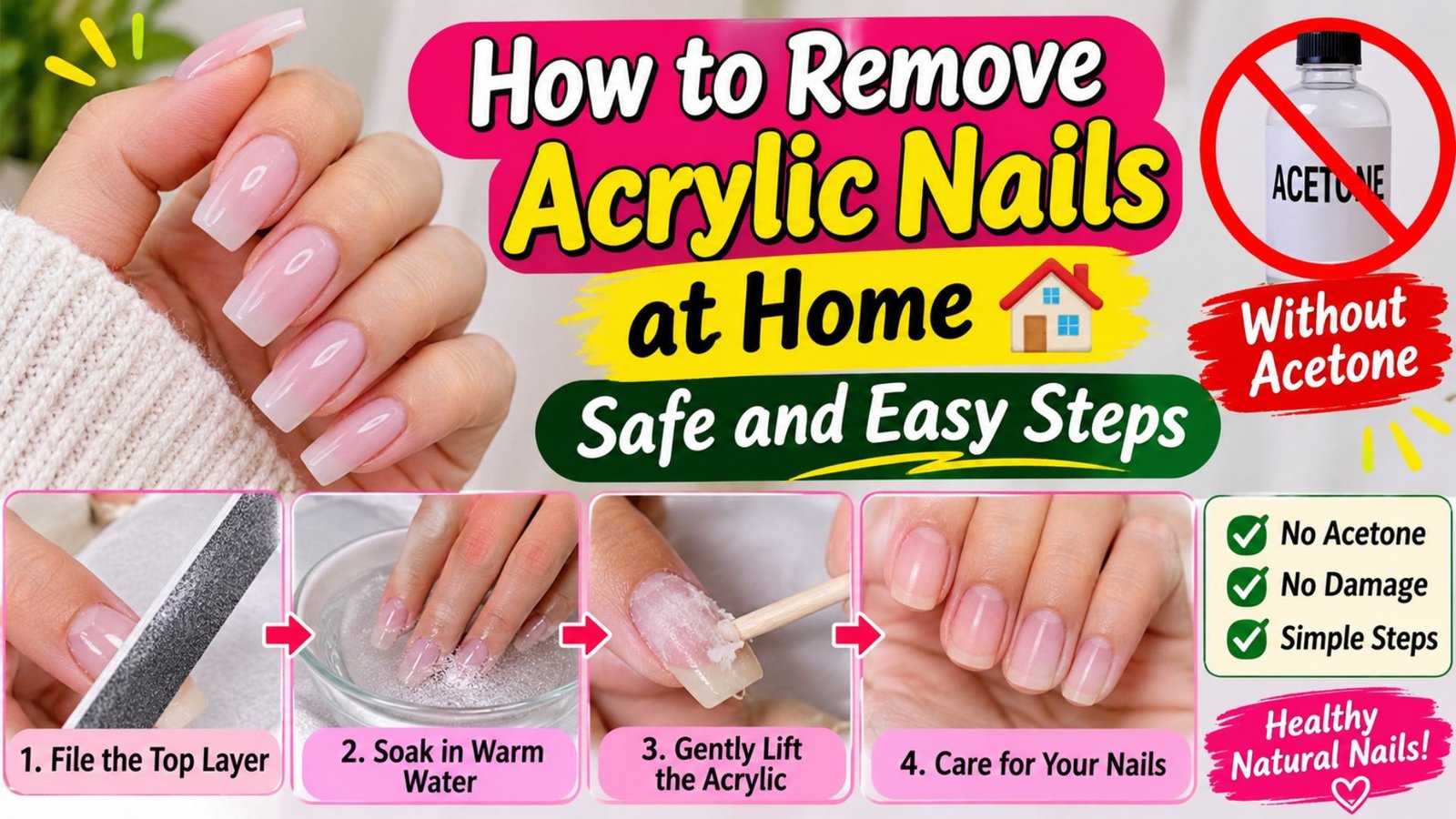
How to Remove Acrylic Nails at Home Without Acetone: Safe and Easy Steps
How to Remove Acrylic Nails at Home Without Acetone
Acrylic nails look beautiful and last longer than regular nail polish, but removing them at home can be challenging. Many people want to know how to remove acrylic nails at home without acetone because acetone can dry out the skin and nails. Fortunately, there are a few alternative methods you can try at home.
You can use warm water, soap, cuticle oil, and a nail file to help loosen acrylic nails. However, these methods may take more time than acetone. It is important to be patient and avoid pulling or forcefully removing acrylic nails because this can damage your natural nails.
In this guide, you will learn simple ways to remove acrylic nails without acetone while protecting your natural nails.
Read More: Halloween Nail Art Designs 2026
Can You Remove Acrylic Nails Without Acetone?
Yes, you can try to remove acrylic nails without acetone, but the process is usually slower. Acrylic products are designed to stay firmly attached to natural nails, so water and oil alone may not dissolve the acrylic material.
Without acetone, the safest approach is to gently shorten the acrylic nails, file down the artificial material, and let a nail professional remove any acrylic that remains firmly attached.
What You Need to Remove Acrylic Nails Without Acetone
Before starting, collect these basic items:
- Warm water
- Mild hand soap
- Cuticle oil or olive oil
- Nail clippers
- Nail file
- Nail buffer
- Wooden cuticle stick
- Moisturizing hand cream
- Clean towel
These items can help make the removal process easier and protect your natural nails.
How to Remove Acrylic Nails at Home Without Acetone: Step-by-Step Guide
Follow these steps carefully to reduce the risk of nail damage.
Step 1: Trim Your Acrylic Nails
First, use a nail clipper to shorten your acrylic nails. Cut only the artificial length and avoid cutting too close to your natural nail.
Shorter acrylic nails are easier to manage and require less filing.
Step 2: File the Acrylic Nail Surface
Use a nail file to gently remove the shiny topcoat and reduce the thickness of the acrylic material.
Do not file deeply into your natural nail. Stop if you feel pain, heat, or discomfort.
Step 3: Soak Your Nails in Warm Soapy Water
Take a small bowl and fill it with comfortably warm water. Add a little mild hand soap and mix it well.
Soak your fingertips for around 15–20 minutes. This can soften the surrounding skin and loosen some adhesive around the edges, although it will not dissolve acrylic.
Step 4: Apply Cuticle Oil
After soaking, dry your hands with a clean towel. Apply cuticle oil or olive oil around the edges of your acrylic nails.
Massage gently around the nail area. Oil can moisturize your skin and help reduce dryness during the process.
Step 5: Check Whether the Acrylic Is Loose
Check the edges carefully. If an acrylic nail is already lifting, do not pull it off.
You can gently assess whether it moves without pressure. If it remains firmly attached, leave it in place. Never force a wooden stick underneath the acrylic.
Step 6: Remove Remaining Acrylic Safely
If some acrylic material remains attached, do not try to peel or pry it off. Continue gentle filing only on the artificial material if you can clearly distinguish it from your natural nail.
For acrylic that is still firmly bonded, visit a trained nail technician for professional removal.
Step 7: Moisturize Your Natural Nails
After the acrylic material has been safely removed, wash your hands and apply cuticle oil.
Use a moisturizing hand cream to keep your hands hydrated. Avoid immediately applying another set of artificial nails if your natural nails feel weak or sensitive.
Other Ways to Remove Acrylic Nails Without Acetone
Here are some common alternatives people consider:
| Method | Purpose | Important Note |
|---|---|---|
| Warm soapy water | Softens surrounding skin | Does not dissolve acrylic |
| Cuticle oil | Moisturizes nails and skin | Does not break down acrylic |
| Olive oil | Helps reduce dryness | Not an acrylic remover |
| Nail file | Reduces acrylic thickness | Avoid filing natural nails |
| Professional removal | Removes firmly attached acrylic | Safest option for stubborn acrylic |
What Should You Avoid When Removing Acrylic Nails?
Removing acrylic nails incorrectly can cause pain, nail thinning, and damage. Avoid these common mistakes:
- Never pull or peel acrylic nails forcefully.
- Do not use sharp tools under your artificial nails.
- Avoid excessive filing on natural nails.
- Do not use boiling or extremely hot water.
- Never use household cleaning chemicals to remove acrylic.
- Stop if you notice pain, bleeding, swelling, or nail lifting.
How to Take Care of Your Natural Nails After Acrylic Removal
Your natural nails may feel weak or dry after wearing acrylic nails. Follow these simple care tips:
- Apply cuticle oil regularly.
- Use hand cream after washing your hands.
- Keep your natural nails at a comfortable length.
- Avoid aggressive buffing.
- Give your nails a break from artificial enhancements if they are damaged.
- Wear gloves when using cleaning products.
If you notice redness, swelling, unusual discoloration, or persistent pain, seek advice from a healthcare professional.
Frequently Asked Questions
1. How to remove acrylic nails at home without acetone?
You can shorten the acrylic nails, gently file down the artificial material, and use warm soapy water and cuticle oil for comfort. However, these products do not dissolve acrylic. A nail technician may be needed to remove the remaining material safely.
2. Can warm water remove acrylic nails?
Warm water can soften the surrounding skin and may loosen some adhesive, but it cannot dissolve acrylic. Do not force the nails off after soaking.
3. Can olive oil remove acrylic nails?
No, olive oil cannot dissolve acrylic. It can moisturize the skin around your nails and help reduce dryness.
4. How long does it take to remove acrylic nails without acetone?
The time depends on the thickness of the acrylic and how firmly it is attached. Acetone-free methods are generally slower and may not completely remove acrylic at home.
5. Is it safe to peel off acrylic nails?
No. Peeling acrylic nails can remove layers of your natural nail and cause pain or damage. Always avoid pulling artificial nails off.
6. What is the safest way to remove acrylic nails?
Professional removal by a trained nail technician is generally the safest option, especially when acrylic nails are firmly attached or your natural nails are already damaged.
Final Thoughts
Learning how to remove acrylic nails at home without acetone can help you understand safer alternatives to traditional removal methods. Warm soapy water and cuticle oil can make your nail-care routine more comfortable, while gentle filing can reduce the artificial material.
However, these methods cannot dissolve acrylic completely. Never pull, peel, or force artificial nails off. If the acrylic remains firmly attached, professional removal is the best way to protect your natural nails.